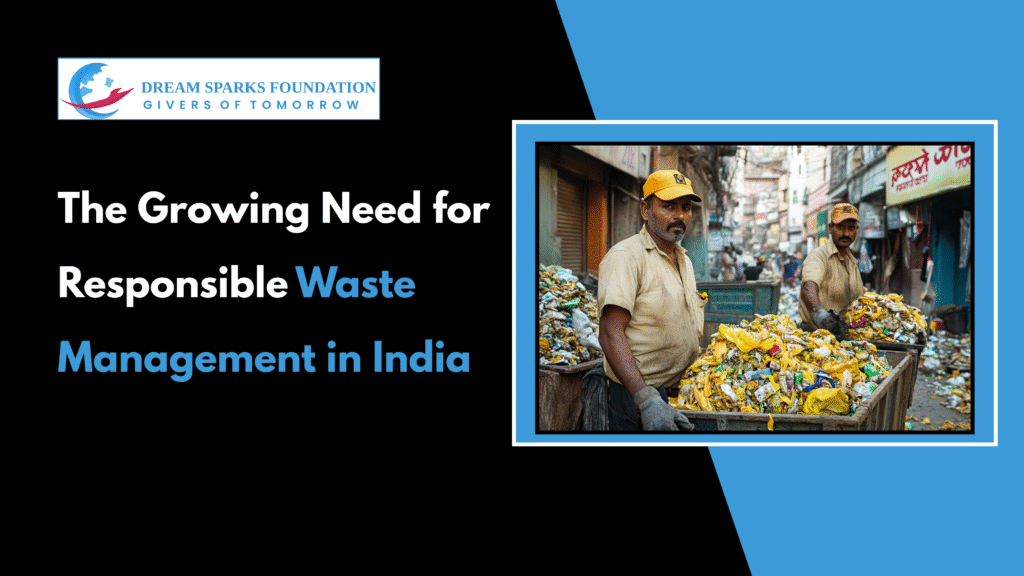
Waste is an unavoidable part of modern life. Every household, office, industry, hospital, and commercial establishment generates waste every day. As India’s population grows and urbanization accelerates, managing waste responsibly has become more important than ever.
From solid waste management and plastic waste management to e-waste recycling and biomedical waste management, effective waste handling plays a crucial role in protecting public health, conserving natural resources, and creating cleaner communities.
At Dream Sparks Foundation, we believe responsible waste management is not just an environmental responsibility—it’s a collective commitment toward building a healthier and more sustainable future.
What Is Waste Management?
Waste management refers to the systematic process of collecting, transporting, segregating, treating, recycling, recovering, and safely disposing of waste materials generated by households, businesses, industries, healthcare facilities, and institutions.
A well-designed waste management system minimizes environmental pollution while maximizing resource recovery through recycling and reuse.
The primary objectives of waste management include:
- Protecting public health
- Preventing environmental pollution
- Conserving natural resources
- Reducing landfill dependency
- Supporting sustainable development
- Encouraging a circular economy
Modern waste management is no longer limited to disposal. It focuses on converting waste into valuable resources through recycling, composting, and responsible recovery processes.
Continue reading about Why Waste Management is Essential for Modern Cities with this link
Why Waste Management Matters More Than Ever in India
India generates millions of tonnes of waste every year, including:
- Municipal solid waste
- Electronic waste
- Plastic waste
- Biomedical waste
- Industrial waste
- Hazardous waste
Rapid urban growth, changing lifestyles, increasing consumption, and expanding industries have significantly increased waste generation.
Without proper waste disposal, waste can lead to:
- Air pollution
- Water contamination
- Soil degradation
- Spread of diseases
- Harm to wildlife
- Greenhouse gas emissions
Responsible solid waste management helps cities remain cleaner while improving the quality of life for future generations.
Types of Waste Management
1. Solid Waste Management
Solid waste management involves collecting, segregating, transporting, processing, recycling, and disposing of everyday waste generated from homes, offices, schools, and commercial spaces.
Examples include:
- Food waste
- Paper
- Plastic
- Glass
- Metal
- Garden waste
- Packaging materials
Proper solid and waste management begins with waste segregation at the source into wet, dry, and hazardous categories.
2. Plastic Waste Management
Plastic has become one of the biggest environmental challenges worldwide.
Effective plastic waste management includes:
- Source segregation
- Collection
- Recycling
- Reuse
- Reduction of single-use plastics
- Responsible disposal
Businesses are increasingly adopting sustainable packaging and supporting recycling initiatives to reduce plastic pollution.
3. E-Waste Management
Discarded electronic devices create a rapidly growing stream of electronic waste.
Common examples include:
- Mobile phones
- Computers
- Laptops
- Televisions
- Printers
- Chargers
- Electronic accessories
Proper e waste management ensures that valuable materials such as copper, aluminum, and precious metals are recovered safely while preventing hazardous substances from entering the environment.
4. Industrial Waste Management
Manufacturing facilities produce various forms of industrial waste, including:
- Chemicals
- Sludge
- Metals
- Packaging waste
- Process residues
Responsible industrial waste management minimizes pollution while improving operational efficiency and regulatory compliance.
Common Waste Management Methods
Source Segregation
Waste should be separated into different categories before collection:
- Wet waste
- Dry waste
- Recyclables
- Hazardous waste
- Electronic waste
Segregation significantly improves recycling efficiency.
Recycling
Waste recycling transforms discarded materials into new products.
Common recyclable materials include:
- Paper
- Plastic
- Glass
- Metals
- Cardboard
Recycling reduces landfill waste while conserving raw materials and energy.
Composting
Organic waste such as food scraps and garden waste can be converted into nutrient-rich compost.
Benefits include:
- Reduced landfill waste
- Improved soil health
- Lower methane emissions
- Sustainable agriculture
Waste-to-Energy
Certain non-recyclable waste can be processed to generate electricity or heat through approved technologies.
This helps reduce landfill volumes while recovering useful energy.
Safe Disposal
Waste that cannot be recycled or recovered should be disposed of through scientifically managed landfills or approved treatment facilities.
Proper waste disposal prevents environmental contamination.
Extended Producer Responsibility (EPR)
Extended Producer Responsibility (EPR) encourages manufacturers to take responsibility for products even after consumers dispose of them.
EPR promotes:
- Product take-back programs
- Recycling infrastructure
- Eco-friendly product design
- Responsible electronic waste collection
This approach strengthens India’s transition toward sustainable waste management.
Waste Management and the Circular Economy
Traditional waste systems follow a “take, make, dispose” model.
A circular economy focuses on:
- Reducing waste generation
- Reusing materials
- Recycling resources
- Recovering valuable components
- Designing products for longer life
This approach conserves natural resources while supporting sustainable economic growth.
Benefits of Responsible Waste Management
Environmental Benefits
- Cleaner cities
- Reduced pollution
- Lower greenhouse gas emissions
- Conservation of natural resources
- Protection of biodiversity
Economic Benefits
- Resource recovery
- Lower waste handling costs
- Improved recycling industries
- Sustainable business opportunities
Social Benefits
- Better public health
- Cleaner neighborhoods
- Increased environmental awareness
- Improved quality of life
Challenges Facing Waste Management in India
espite growing awareness, India continues to face several challenges:
- Increasing waste generation
- Poor waste segregation at source
- Limited recycling infrastructure
- Plastic pollution
- Illegal dumping
- Lack of public awareness
- Informal waste handling practices
India's Future in Waste Management (2026 and Beyond)
India is steadily moving toward more sustainable waste practices through:
- Improved waste segregation
- Expansion of recycling facilities
- Better collection garbage systems
- Greater adoption of circular economy principles
- Increased awareness campaigns
- Stronger Extended Producer Responsibility implementation
- Growth in e waste recycling initiatives
Conclusion
Responsible waste management is essential for protecting public health, preserving natural resources, and ensuring a sustainable future. From solid waste management and plastic waste management to biomedical waste management, industrial waste management, and e-waste recycling, every step contributes to building cleaner and healthier communities.
As India advances toward a more sustainable future in 2026 and beyond, collaboration between citizens, organizations, industries, and policymakers will be key. By embracing responsible waste management practices and supporting the principles of a circular economy, we can reduce pollution, conserve valuable resources, and leave a healthier planet for future generations.
Dream Sparks Foundation remains committed to promoting environmental awareness, encouraging responsible waste practices, and inspiring communities to take meaningful action toward a cleaner, greener, and more sustainable India.