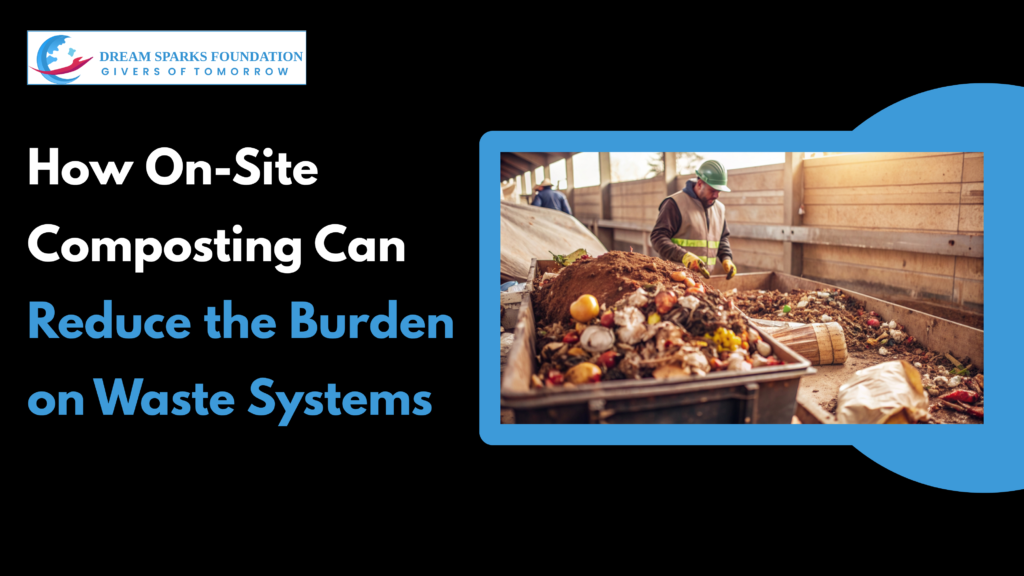
India generates a significant amount of organic waste every day from homes, apartments, restaurants, institutions, offices, and commercial establishments. A large portion of this waste consists of kitchen scraps, food leftovers, garden waste, and other biodegradable materials. When organic waste is mixed with general garbage and sent to landfills, it can contribute to unpleasant odours, environmental pollution, and increased pressure on already burdened waste management systems.
One practical solution is composting.
Composting transforms biodegradable waste into a nutrient-rich material that can be used to improve soil health and support plants. More importantly, on-site composting can help process organic waste closer to where it is generated, reducing the quantity of waste that needs to be transported and disposed of through conventional waste systems.
What Is On-Site Composting?
On-site composting is the process of treating organic waste at or near the location where it is generated instead of sending it to a distant disposal facility.
For example, an apartment community can process its kitchen and garden waste within the premises. Similarly, schools, hotels, offices, restaurants, and institutions can establish suitable composting systems to manage their biodegradable waste.
Depending on the volume and type of waste, composting can be carried out through traditional composting methods or through a composting machine in India designed for larger-scale food and organic waste processing.
The objective is simple: reduce the amount of organic waste entering the conventional waste stream and turn it into a useful resource.
Continue reading about Organic Recycling: Turning Food and Green Waste into Valuable Resources with this link
Why Is Organic Waste a Problem for Landfills?
Food and garden waste contain a large amount of biodegradable material. When this waste is disposed of in landfills along with non-biodegradable materials, it takes up valuable landfill capacity.
Organic waste can also decompose under conditions where oxygen is limited, potentially generating methane and other gases. Poorly managed organic waste may also create odour, attract insects and animals, and contribute to leachate-related environmental concerns.
Instead of treating food waste as something that must simply be discarded, communities can adopt food waste treatment and composting practices that keep biodegradable materials within a more sustainable resource cycle.
How Composting Can Reduce India’s Landfill Burden
1. Diverts Food Waste from Landfills
One of the biggest advantages of composting is waste diversion.
Kitchen scraps such as vegetable peels, fruit waste, leftover food, and other suitable biodegradable materials can be separated at source and processed through composting.
When kitchen waste into compost becomes a regular practice, less organic material needs to enter the general waste stream.
This can help reduce the quantity of waste transported to landfills and other disposal facilities.
2. Extends the Useful Life of Landfill Space
Landfill capacity is limited. Sending large quantities of biodegradable waste to disposal facilities increases the pressure on existing waste infrastructure.
On-site composting can help reduce this pressure by processing a portion of organic waste locally.
The more organic waste that is responsibly diverted from disposal, the less volume needs to be accommodated by landfill systems.
This makes composting an important part of broader landfill solutions.
3. Converts Waste into a Useful Resource
Composting follows a circular approach to waste management.
Instead of viewing food scraps as useless garbage, composting converts suitable organic material into compost that can support gardening, landscaping, and soil improvement.
Composting Food Waste at Home
Composting does not have to be limited to large facilities.
Households can also practice composting food waste at home using appropriate composting methods and equipment.
Common compostable materials can include:
- Fruit and vegetable peels
- Certain food leftovers
- Coffee grounds
- Tea leaves
- Eggshells
- Garden leaves and plant material
However, not every type of waste is suitable for every composting system. Proper segregation and following the instructions of the selected composting method are essential.
For households generating larger quantities of organic waste, a home food waste composting machine may provide a convenient alternative to traditional composting methods.
Composting in Apartments and Residential Communities
Residential communities can generate substantial quantities of kitchen and garden waste every day.
Instead of sending all this material into the general waste stream, communities can establish a dedicated organic waste management process.
A typical system can involve:
Source Segregation → Collection → Pre-Processing → Composting → Curing → Compost Utilisation
For communities with higher volumes, a kitchen waste composting machine in India or suitable organic waste processing equipment can support systematic on-site processing.
The exact equipment required depends on the quantity and composition of waste, available space, operational requirements, and composting cost.
Food Waste Shredding and Pre-Processing
Some composting systems use pre-processing steps to make organic waste easier to handle.
A food waste shredder machine can reduce the particle size of suitable organic materials, depending on the system being used.
Similarly, a solid waste shredder machine may be used in certain waste-processing applications, but equipment should always be selected according to the specific waste type and manufacturer’s recommendations.
For kitchen waste management, the appropriate kitchen waste disposal machine or processing equipment should be chosen based on the quantity and characteristics of the organic material.
Shredding or pre-processing is not a replacement for segregation. Non-compostable materials should still be removed before organic waste enters the processing system.
Composting Is More Than Just Garbage Disposal
The concept of composting changes how we think about waste.
Instead of asking, “Where can we dispose of this garbage?”, composting encourages us to ask:
“How can we recover value from this organic material?”
This shift is important for creating more sustainable communities.
A garbage to compost machine or other suitable composting equipment can support this approach where the volume and operational conditions justify mechanical processing.
However, technology alone cannot solve the waste problem. Effective composting requires source segregation, proper operation, regular monitoring, responsible maintenance, and appropriate use of the finished compost.
How On-Site Composting Supports a Circular Waste System
A circular waste system aims to keep useful materials in circulation for as long as possible.
Organic waste naturally fits into this concept because biodegradable materials can be transformed into compost and returned to the soil.
Instead of:
Consume → Discard → Transport → Landfill
a more sustainable model is:
Consume → Segregate → Compost → Recover → Reuse
This approach can help communities reduce waste generation at the disposal stage while creating a useful output from biodegradable materials.
What Is the Best Composting Method?
There is no single method that can be called the best compost or the best composting system for every situation.
The right method depends on the type and quantity of organic waste, available space, climate, operating conditions, budget, and intended use of the finished compost.
For a small household, a simple composting system may be sufficient.
For a large apartment complex, hotel, institution, or commercial facility, a dedicated solid waste composting machine or larger organic waste processing system may be more suitable.
The focus should always be on selecting a system that can be operated consistently and responsibly.
How Dream Sparks Foundation Can Encourage Responsible Waste Management
Organisations such as Dream Sparks Foundation can play an important role in promoting awareness around responsible waste management and sustainable community practices.
Awareness programmes can encourage people to:
- Segregate waste at the source.
- Reduce unnecessary food waste.
- Separate biodegradable waste from recyclables and reject waste.
- Explore suitable composting methods.
- Use compost in gardens and landscaping.
- Educate children and communities about resource recovery.
- Support local and sustainable waste-management initiatives.
The goal is not simply to process waste but to create a culture where waste reduction, segregation, recovery, and reuse become part of everyday life.
Composting as a Practical Landfill Solution
India’s waste-management challenge requires multiple solutions working together. Recycling, source segregation, waste reduction, responsible disposal, material recovery, and organic waste treatment all have important roles to play.
Composting can address one of the most important components of the waste stream: biodegradable organic waste.
By processing suitable food and garden waste at or near its source, communities can reduce the amount of organic material sent to disposal facilities.
On-site composting therefore offers a practical approach to reducing landfill pressure while producing a valuable resource for soil and plants.
Conclusion
How composting can reduce India’s landfill burden is ultimately a question of changing how we manage organic waste.
Food scraps, vegetable peels, garden waste, and other biodegradable materials do not always need to become landfill waste. With proper segregation and suitable composting practices, these materials can be transformed into useful compost.
From simple household systems to larger composting machines in India, the right approach depends on the scale and requirements of the waste generator.
Composting cannot solve every waste-management challenge on its own, but it can be an important part of a broader solution. When households, residential communities, institutions, businesses, and organisations take responsibility for organic waste at its source, they can help reduce pressure on waste transportation and disposal systems.