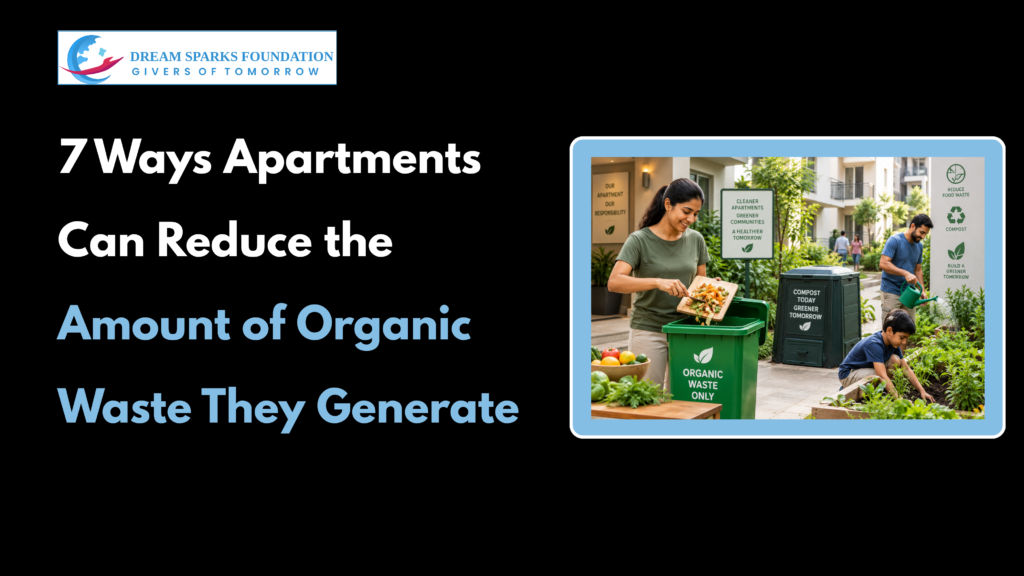
As apartment communities continue to grow, managing the waste generated by hundreds of households has become an important environmental and community responsibility. Every day, apartments generate a combination of food scraps, garden waste, paper, cardboard, plastic packaging, and other household waste.
Among these, organic waste makes up a significant portion of the waste generated by households. Food leftovers, fruit and vegetable peels, and garden waste can quickly accumulate when they are not properly managed.
The challenge is not simply about collecting waste. Effective waste management begins with reducing the amount of waste generated, segregating it correctly, recovering useful materials, and disposing of unavoidable waste responsibly.
For apartment communities, small changes in everyday habits can create a significant collective impact.
Here are seven practical and proven ways apartment residents can reduce organic waste and contribute to a cleaner, more sustainable community.
1. Prevent Food Waste Through Better Planning
The most effective way to manage food waste is to prevent it from being generated in the first place.
Overbuying, preparing excessive portions, and forgetting food stored in refrigerators are common reasons households throw away edible food. Apart from wasting food, this also wastes the water, energy, land, labour, transportation, and other resources used to produce and deliver it.
Residents can reduce unnecessary food waste by:
- Planning meals before shopping
- Preparing appropriate portions
- Checking existing food before purchasing more
- Storing food correctly
- Using leftovers creatively
- Buying perishable products according to actual household requirements
A simple weekly meal plan can make a noticeable difference. When these habits are adopted by hundreds of households, the overall quantity of organic waste generated by an apartment community can be reduced considerably.
2. Segregate Organic Waste at the Source
Proper segregation is the foundation of an efficient waste management system.
Wet or organic waste should be separated from dry recyclable materials and non-recyclable waste at the point where it is generated. Mixing different waste streams makes recovery and processing more difficult and can contaminate otherwise recyclable materials.
Typical organic waste includes:
- Fruit and vegetable peels
- Leftover food
- Coffee grounds
- Tea waste
- Eggshells
- Garden and leaf waste
Apartment associations can support residents by providing clearly labelled bins and simple instructions explaining what belongs in each category.
Continue reading about How Composting Can Reduce India’s Landfill Burden with this link.
3. Turn Organic Waste Into a Resource
Organic waste does not necessarily have to end its journey in a landfill or general disposal stream.
Where appropriate infrastructure is available, apartment communities can process biodegradable waste through suitable composting or organic waste treatment methods. The resulting compost or processed organic material can potentially be used for landscaping, gardens, and other community green spaces.
This approach changes the way communities think about waste.
Instead of viewing food and garden waste simply as something to throw away, residents can see it as a resource that can be recovered and put to productive use.
4. Make Recycling Convenient for Residents
Convenience plays an important role in recycling.
Residents are more likely to recycle correctly when the process is simple, clearly explained, and supported by appropriate collection infrastructure.
Apartment communities can establish dedicated collection areas for materials such as:
- Cardboard
- Newspapers and paper
- Metal containers
- Glass
- Suitable plastic packaging
With the rise of online shopping, cardboard waste has become increasingly common in many residential communities. Dedicated cardboard recycling bins can help prevent these materials from being mixed with wet waste.
5. Follow the 3Rs: Reduce, Reuse and Recycle
A sustainable waste management approach goes beyond recycling.
The 3R principle — Reduce, Reuse and Recycle — encourages people to consider whether an item needs to be purchased, whether it can be used again, and whether it can be recycled before sending it for disposal.
Residents can incorporate reuse into everyday life by:
- Carrying reusable shopping bags
- Reusing suitable containers
- Donating usable clothing and household items
- Repairing products instead of immediately replacing them
- Sharing rarely used items within the community
- Choosing reusable alternatives to disposable products
Reducing consumption and extending the useful life of products can prevent waste before it enters the waste management system.
6. Build a Community-Level Waste Management Plan
Individual action is important, but apartment communities can achieve greater results when residents, management committees, housekeeping teams, and facility teams work together.
A structured community waste management plan can include:
- Clearly defined waste categories
- Convenient collection points
- Regular waste segregation monitoring
- Organic waste processing
- Recycling arrangements
- Resident awareness programs
- Periodic review of waste generation
- Responsible disposal of unavoidable waste
Apartment management committees can also track the quantity and type of waste generated over time. This can help identify recurring problems and opportunities to reduce waste collection costs.
7. Create a Culture of Sustainability
Infrastructure alone cannot solve the waste challenge.
Long-term improvement depends on people understanding why responsible waste management matters and making sustainable practices part of their daily routines.
Apartment communities can organise:
- Waste segregation awareness drives
- Food waste reduction campaigns
- Recycling collection drives
- Composting awareness sessions
- Community clean-up activities
- Sustainability workshops for residents and children
- Green community initiatives
Children can also play an important role in creating awareness at home. When sustainable habits are introduced at an early age, they can become part of everyday behaviour.
Why Reducing Organic Waste Matters
Food waste is not simply a household disposal issue. It has a broader environmental impact.
When food is wasted, the resources used to produce, transport, store, and prepare that food are also effectively wasted. When organic waste is sent to landfills and decomposes under oxygen-limited conditions, it can contribute to methane emissions.
Reducing food waste therefore supports both environmental sustainability and resource conservation.
The Role of Apartment Residents in Sustainable Waste Management
Waste management is a shared responsibility.
Municipal authorities, waste management organisations, recycling organisations, apartment associations, facility management teams, service providers, and residents all have important roles to play.
However, residents are at the starting point of the waste cycle.
The decision to avoid unnecessary food purchases, separate wet and dry waste, reuse products, or place cardboard in a designated recycling bin may appear small. But when thousands of households adopt these practices consistently, the collective impact can be substantial.
Moving Towards Cleaner and More Sustainable Communities
Apartment communities have a unique opportunity to demonstrate how responsible waste management can become part of everyday living.
The goal should not be to simply move waste from a household bin to a collection vehicle. A more sustainable approach focuses on the entire waste lifecycle — prevention, segregation, recovery, recycling, treatment, and responsible disposal.
By adopting these seven practices, apartment residents can help:
- Reduce food and organic waste
- Improve source segregation
- Increase recycling
- Reduce unnecessary disposal
- Support resource recovery
Every apartment community may have different requirements, infrastructure, and waste generation patterns. The most effective approach is therefore one that is practical for the community and consistently followed by residents.
Encourage Residents to Buy More Responsibly
Waste reduction begins before a product enters the home.
Residents can reduce future waste by considering packaging, durability, reusability, and actual necessity before making purchases.
Some simple practices include:
- Choosing products with less packaging
- Buying reusable products
- Carrying reusable shopping bags
- Avoiding unnecessary disposable products
- Purchasing quantities that can realistically be consumed
- Choosing durable products over short-life alternatives
- Supporting refill or reuse options where available
Responsible consumption can significantly reduce the amount of waste that eventually enters the apartment’s waste management system.
Conclusion
Sustainable waste management does not begin at the collection point. It begins with everyday decisions made inside every apartment.
Planning meals, preventing food waste, segregating organic waste, recycling cardboard, reusing products, and participating in community initiatives may seem like small actions. Collectively, however, they can make a meaningful difference.
For apartment communities, the path toward sustainability is not about achieving perfection overnight. It is about building consistent habits, creating the right systems, and encouraging everyone to participate.
By working together, apartment residents can reduce the amount of waste they generate, conserve valuable resources, improve community cleanliness, and contribute to a more sustainable future.