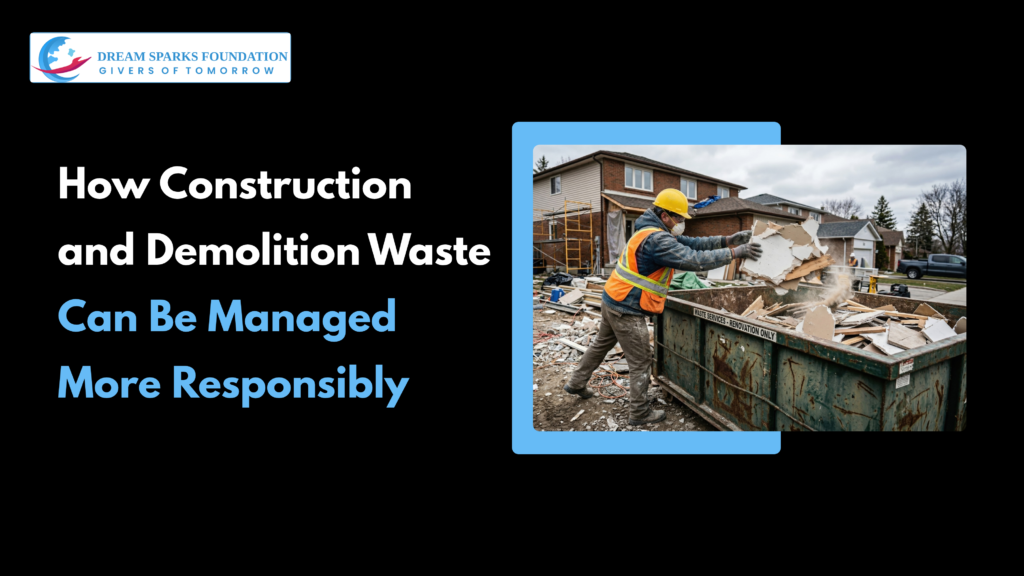
Construction plays an important role in urban development, infrastructure growth, and economic progress. However, construction and demolition activities also generate significant amounts of waste, including concrete, bricks, wood, metal, glass, soil, tiles, and other building materials. When these materials are dumped without proper planning, they can occupy valuable land, contribute to pollution, and waste resources that could otherwise be recovered and reused.
Construction and demolition waste management is an essential part of building a more sustainable future. By adopting responsible waste segregation, material recovery, recycling, and reuse practices, construction companies, contractors, property owners, and communities can reduce unnecessary waste and support a circular economy.
At Dream Sparks Foundation, promoting environmental awareness and responsible resource use is an important step towards a cleaner and more sustainable environment. Understanding how construction waste can be managed responsibly helps individuals and organisations make better decisions about the materials they use and discard.
What Is Construction and Demolition Waste?
Construction and demolition (C&D) waste refers to materials generated during the construction, renovation, repair, and demolition of buildings, roads, bridges, and other infrastructure projects.
Common examples include:
Concrete and bricks: Broken concrete blocks, masonry, and demolished brickwork.
Wood and timber: Wooden frames, doors, flooring, and packaging materials.
Metals: Steel reinforcement bars, aluminium frames, and metal fittings.
Glass: Windowpanes, glass partitions, and other building components.
Soil and excavated materials: Earth, stones, and other materials removed during site preparation.
Tiles and ceramics: Broken tiles, sanitary fittings, and ceramic materials.
Plastics and packaging: Construction-related plastic products, wrapping, and packaging that require appropriate handling.
Some materials can be reused directly, while others need processing before they can be recycled. Certain waste streams may also contain hazardous substances and require specialised handling.
Identifying the type of waste generated at a construction site is the first step towards an effective waste management system.a
Why Is Construction and Demolition Waste Management Important?
Poor waste disposal practices can create environmental, operational, and financial challenges. Construction debris left in open areas may obstruct drainage, generate dust, affect nearby communities, and occupy land that could be used more productively.
Responsible construction waste management offers several benefits.
1. Reduces Environmental Pollution
Uncontrolled dumping of construction debris can affect land quality, contribute to dust pollution, and create problems for surrounding areas. Proper segregation, transportation, and authorised processing help reduce these risks.
2. Conserves Natural Resources
Concrete, bricks, metals, and timber contain materials that can potentially be recovered. Reusing and recycling suitable materials reduces the demand for newly extracted resources and supports more efficient resource consumption.
3. Reduces Waste Disposal Costs
Separating reusable and recyclable materials from mixed debris can reduce the volume of waste sent to disposal facilities. It may also lower transportation and handling costs when recycling and recovery options are available nearby.
4. Supports Sustainable Construction
Responsible waste management encourages construction businesses to consider the environmental impact of materials throughout a project’s lifecycle, from purchasing and installation to renovation and demolition.
5. Encourages a Circular Economy
A circular economy aims to keep resources in use for as long as possible. Instead of treating every discarded building material as garbage, construction projects can identify opportunities to recover, reuse, and recycle suitable materials.
This approach supports the principles of reduce, reuse, and recycle while helping minimise avoidable waste.
What Are the Best Ways to Manage Construction and Demolition Waste Responsibly?
Effective construction and demolition waste management begins before work starts and continues throughout the project.
1. Plan for Waste Reduction Before Construction Begins
Waste prevention is often more effective than managing waste after it has already been generated. Project managers and contractors can estimate material requirements carefully, coordinate deliveries, and avoid unnecessary purchases.
Practical measures include:
Preparing accurate material estimates.
Ordering materials according to project requirements.
Protecting cement, timber, tiles, and other supplies from damage.
Using standard material sizes where practical.
Planning building designs that allow components to be maintained or replaced more easily.
Careful planning helps reduce material wastage, unnecessary expenses, and the amount of debris requiring disposal.
2. Separate Waste at the Source
Source segregation means separating different types of waste where they are generated rather than mixing everything into a single container.
Construction sites can establish clearly marked storage areas for concrete, bricks, metals, wood, glass, soil, and mixed residual waste. Materials that may be hazardous should be identified and stored separately according to applicable requirements.
Segregation makes it easier to identify materials suitable for reuse or recycling. It also reduces contamination, which can otherwise make material recovery more difficult and expensive.
3. Reuse Materials Wherever Possible
Many materials from renovation and demolition projects can be reused when they remain in suitable condition.
For example:
Intact doors and windows may be recovered for suitable projects.
Bricks can sometimes be cleaned and reused.
Timber may be reused for appropriate construction or temporary applications.
Unused tiles and fittings may be retained for repairs.
Excavated soil may be reused on-site when its quality and intended use are suitable.
Reuse should always consider structural safety, material condition, contamination, and applicable building standards.
By extending the useful life of building materials, construction projects can reduce demand for new resources and prevent avoidable waste.
4. Recycle Suitable Construction Materials
Recycling converts discarded materials into useful inputs for new products or applications.
Concrete and masonry can be processed into recycled aggregates where they meet the required specifications. Scrap steel and aluminium can enter metal recycling streams, while suitable untreated timber may be recovered for other uses.
However, not every material is recyclable in every location. Recycling options depend on material quality, contamination, processing facilities, transportation costs, and local regulations.
Working with authorised recyclers and approved construction waste processing facilities helps ensure that recovered materials are handled appropriately.
Continue reading about What Is Zero Waste? A Complete Guide to Building a Zero-Waste Workplace with this link.
5. Use Construction Materials More Efficiently
Eco-friendly materials and efficient construction methods can help reduce waste throughout a building’s lifecycle.
Project teams can consider durable products, modular construction, prefabricated components, recycled-content materials, and designs that make future repairs and disassembly easier.
Material selection should account for durability, safety, performance, availability, and environmental impact. Choosing a material simply because it is labelled sustainable does not guarantee that it is the best option for every project.
The objective is to make informed decisions that reduce unnecessary resource consumption without compromising building quality.
How Does Construction Waste Management Support a Circular Economy?
A circular economy focuses on reducing waste and keeping materials in productive use instead of following a one-way pattern of extraction, production, consumption, and disposal.
In conventional construction practices, materials are purchased, used, and discarded when buildings are renovated or demolished. A circular approach looks for opportunities to retain their value.
For example, concrete from a suitable demolition project can be processed into recycled aggregate. Recoverable metal can be sent to recycling facilities, and usable timber can be incorporated into another application.
These practices help reduce demand for virgin materials and support more efficient resource use.
A circular construction approach can include:
Designing buildings for durability and adaptability.
Conducting material audits before demolition.
Recovering reusable components.
Separating recyclable materials at the source.
Purchasing suitable products with recycled content.
Tracking the quantity and destination of recovered materials.
Although these measures cannot eliminate all construction waste, they can significantly improve how resources are managed.
What Is the Difference Between Construction Waste, General Solid Waste, and E-Waste?
Different waste categories require different management methods. Understanding these differences helps prevent incorrect disposal and contamination.
Construction and demolition waste: Includes concrete, bricks, masonry, tiles, timber, and other materials generated by building, renovation, and demolition activities.
General solid waste: Includes everyday discarded materials from households, offices, and commercial activities. Depending on its composition, it may include food scraps, paper, packaging, and other items requiring separate handling.
Electronic waste (e-waste): Includes discarded electrical and electronic equipment, such as computers, televisions, phones, and other electronic devices. E-waste management requires appropriate collection, authorised recycling, and safe handling of potentially hazardous components.
Hazardous waste: Certain discarded materials may contain hazardous chemicals or other substances that require specialised storage, transportation, treatment, or disposal.
What Role Can Businesses and Communities Play?
Responsible waste management requires cooperation between construction companies, contractors, local authorities, waste processors, property owners, and communities.
Businesses can begin by establishing a clear construction waste management plan that identifies the types of waste expected, the methods of segregation, the available recycling options, and the approved destinations for residual materials.
Site supervisors can train workers to separate materials correctly and prevent recoverable items from being mixed with general debris. Procurement teams can reduce excess material purchases, while project managers can review waste records to identify opportunities for improvement.
Property owners planning renovation or demolition can also ask contractors how debris will be separated, transported, and processed.
Communities can contribute by reporting illegal dumping through the appropriate local channels and encouraging responsible practices in residential and commercial developments.
Environmental organisations such as Dream Sparks Foundation can help build awareness of responsible resource use, waste reduction, recycling, and sustainable community practices.
How Can Technology Improve Construction Waste Management?
Digital tools can help project teams organise and monitor waste management activities more effectively.
For example, digital records can track the quantity of materials generated, the amount recovered for reuse or recycling, transportation details, and the final destination of waste.
Simple reporting systems can help managers identify recurring problems, compare waste generation across project stages, and improve future planning.
Photographic records, digital checklists, and material inventories can also support accountability among contractors and site teams.
Technology alone does not guarantee better outcomes. Its effectiveness depends on accurate data, consistent implementation, trained workers, and access to appropriate recovery and disposal facilities.
How Can Construction Projects Move Towards Zero Waste?
Zero waste is a long-term goal that focuses on preventing waste and keeping resources in use wherever practical. In construction, it requires a systematic approach rather than relying on recycling alone.
Projects can take the following steps:
Measure waste generation: Record the types and quantities of materials discarded during different project stages.
Prevent avoidable waste: Improve design, estimation, procurement, and material storage.
Prioritise reuse: Recover components that can safely serve another purpose.
Improve recycling: Separate suitable materials and connect with authorised recycling facilities.
Manage residual waste responsibly: Ensure that materials unsuitable for recovery reach appropriate facilities.
Review performance: Set realistic targets and assess progress throughout the project.
Waste-to-energy processes may be relevant for certain suitable residual waste streams, depending on their composition and the available infrastructure. However, they are not a substitute for preventing waste or recovering reusable construction materials.
Conclusion
Construction and demolition waste management is an important part of sustainable development. By reducing material wastage, segregating debris, reusing suitable components, recycling recoverable materials, and ensuring responsible disposal, construction projects can reduce environmental impacts and make better use of natural resources.
The transition towards a circular economy requires practical action from businesses, contractors, communities, and individuals. Small improvements in planning, material handling, and waste segregation can contribute to more responsible construction practices.
At Dream Sparks Foundation, environmental awareness and responsible resource use are valuable steps towards a cleaner future. By encouraging sustainable habits and informed waste management decisions, we can help build communities that value resources and work towards reducing unnecessary waste.