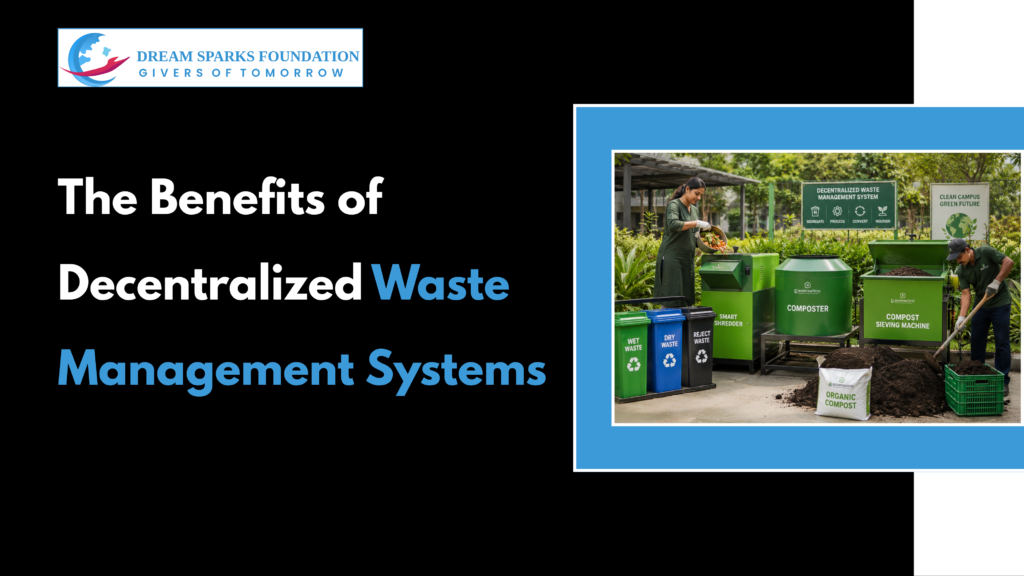
Decentralized Waste Management is a waste management system where waste is collected, segregated, processed, and recycled at or near the location where it is generated instead of transporting everything to centralized landfills.
Examples include:
- Apartment waste processing units
- Community composting centers
- Commercial organic waste converters
- Dry waste collection centers
- Local recycling facilities
- Institutional waste management systems
This model significantly reduces the burden on municipal waste infrastructure while promoting sustainability.
Continue reading about How Does Recycling Reduce Pollution? A Complete Guide to a Cleaner Future with this link
Why Is Decentralized Waste Management Important?
India generates over 160,000 tonnes of municipal solid waste every day, and this number continues to rise due to rapid urbanization, industrial growth, and changing lifestyles. A significant portion of this waste is still disposed of in landfills without proper segregation.
Common challenges include:
- Overflowing landfills
- Mixed waste collection
- Rising waste transportation costs
- Greenhouse gas emissions
- Low recycling rates
- Poor waste segregation practices
A decentralized waste management system addresses these issues by treating waste as a resource instead of a problem.
How Does a Decentralized Waste Management System Work?
1. Waste Segregation at Source
Waste is separated into different categories such as:
- Wet waste
- Dry waste
- Plastic waste
- Paper
- Glass
- Metal
- E-waste
- Hazardous waste
Proper waste segregation improves recycling efficiency and reduces contamination.
2. Collection
Instead of transporting mixed garbage over long distances, waste is collected locally through organized collection systems.
Communities often use:
- Color-coded bins
- Door-to-door collection
- Segregated waste vehicles
- Community collection points
3. Organic Waste Processing
Organic waste can be converted into valuable resources through:
- Composting
- Vermicomposting
- Organic Waste Converters (OWCs)
- Biogas plants
The resulting compost supports landscaping, agriculture, and gardening.
4. Dry Waste Recovery
Dry waste is sorted into recyclable materials such as:
- Plastic
- Paper
- Cardboard
- Glass
- Metals
These materials are sent to recycling industries instead of landfills.
5. Safe Disposal of Non-Recyclables
Only the small fraction of waste that cannot be recycled or recovered is transported for scientific disposal.
Major Benefits of Decentralized Waste Management
1. Reduces Landfill Waste
One of the biggest benefits is reducing the amount of waste sent to landfills.
With proper segregation and local processing:
- More waste gets recycled
- Organic waste becomes compost
- Plastic waste is recovered
- Landfill life increases
This significantly reduces environmental pollution.
2. Lower Transportation Costs
Transporting waste over long distances requires:
- Fuel
- Collection vehicles
- Drivers
- Maintenance
- Logistics
A decentralized system minimizes transportation, making waste management more cost-effective.
3. Better Waste Segregation
People become more responsible when waste is processed within their own community.
This improves:
- Recycling rates
- Resource recovery
- Compost quality
- Waste handling efficiency
Challenges of Decentralized Waste Management
While beneficial, some challenges include:
- Limited public awareness
- Improper waste segregation
- Space constraints
- Initial infrastructure costs
- Need for regular maintenance
- Behavioral change among residents
These challenges can be addressed through education, community engagement, and effective planning.
How Dream Sparks Foundation Supports Sustainable Waste Management
At Dream Sparks Foundation, we believe sustainable waste management begins at the source. By promoting decentralized waste management practices, encouraging proper segregation, we help communities reduce landfill waste and protect natural resources.
Our focus is to create cleaner neighborhoods, improve recycling efficiency, and empower individuals to adopt responsible waste management habits that contribute to a healthier and more sustainable future.
Conclusion
Decentralized waste management is transforming how communities and organizations handle waste. By processing waste near its source, it reduces landfill dependence, lowers transportation costs, increases recycling rates, and supports environmental sustainability. As India moves toward cleaner and smarter cities, adopting decentralized waste management systems is no longer just an option—it is a necessity.
For organizations like Dream Sparks Foundation, promoting decentralized waste management is an opportunity to inspire responsible waste practices, strengthen community participation, and build a cleaner, greener future for generations to come.