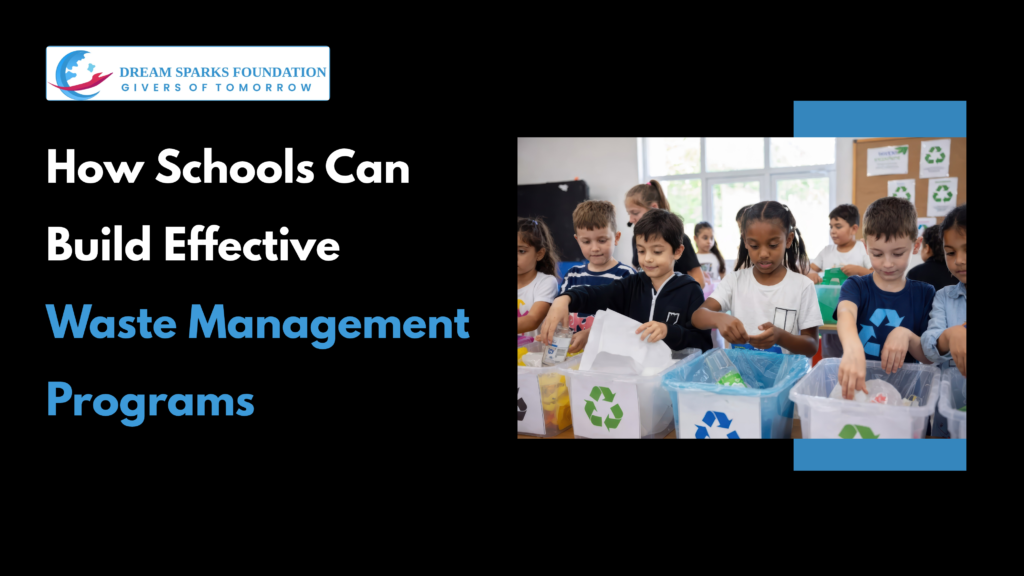
Schools are more than places where students learn academic subjects. They are also environments where children develop habits, values and behaviours that can influence their communities for years to come. One important habit schools can encourage is responsible waste management.
A school waste management programme can help students and staff understand how waste is generated, how it should be separated, what can be reused or recycled, and how waste that cannot be recovered should be disposed of responsibly.
But simply placing a few waste bins around a campus does not make a waste programme effective. A successful programme combines waste segregation, waste reduction, recycling, responsible waste collection, education and regular monitoring.
So, what makes a school waste programme truly effective?
What Is School Waste Management?
School waste management refers to the organised process of reducing, segregating, collecting, recycling, reusing and disposing of waste generated within a school.
Schools can generate different types of waste, including:
- Food and kitchen waste
- Paper and cardboard
- Plastic packaging
- Garden and organic waste
- Used stationery
- E-waste
- Sanitary waste
- General non-recyclable waste
A good waste management system helps ensure that these materials are handled appropriately instead of being mixed together and sent directly for disposal.
The objective is not simply to remove waste from the school premises. It is to reduce the amount of waste generated and recover as much useful material as possible.
Why Is Waste Management Important in Schools?
Schools can play an important role in developing environmentally responsible habits among young people.
When students regularly see waste segregation bins, participate in recycling activities and learn why waste should not be mixed, waste management becomes part of everyday behaviour.
An effective programme can help schools:
- Reduce the amount of waste sent for disposal
- Improve waste segregation
- Increase recycling and reuse
- Reduce unnecessary consumption
- Keep classrooms and common areas cleaner
- Encourage responsible waste disposal
- Build environmental awareness among students
- Create practical learning opportunities
The habits developed at school can also influence how students manage waste at home and in their communities.
Continue reading about What Is Circular Waste Management and How Does It Work? with this link.
1. Start With Waste Segregation
One of the most important elements of a school waste management programme is segregation at the source.
Instead of putting every type of waste into one waste bin, schools can provide clearly identified bins for different waste categories.
For example:
- Organic/Wet Waste: Food scraps and other suitable biodegradable materials
- Dry/Recyclable Waste: Paper, cardboard and suitable recyclable materials
- Non-Recyclable Waste: Materials that cannot be recovered through the school’s recycling system
Schools should use clear labels, simple instructions and visual signs so that students can easily understand where different waste materials belong.
A waste segregation bin is most effective when people using it understand what should and should not be placed inside.
2. Make Recycling Easy to Follow
Recycling programmes often fail when the process is complicated or unclear.
Schools can make recycling easier by placing recycling bins in locations where waste is commonly generated, such as classrooms, cafeterias, staff rooms and activity areas.
However, simply installing recycling bins is not enough. Schools should also establish a clear process for:
- Identifying recyclable materials
- Separating recyclable waste
- Collecting the materials
- Storing them safely
- Sending suitable materials to authorised recycling channels
This creates a practical connection between waste and recycling rather than treating recycling as an isolated activity.
3. Focus on Waste Reduction, Not Just Disposal
An effective waste programme should follow the principle of reducing waste before focusing on disposal.
Schools can identify common sources of unnecessary waste and introduce simple measures to reduce them.
Examples include:
- Encouraging reusable water bottles
- Reducing unnecessary printing
- Using digital notices where appropriate
- Avoiding excessive packaging
- Reusing paper where possible
- Encouraging reusable food containers
- Choosing products with less packaging
Waste reduction can often have a greater long-term impact than simply improving the way waste is disposed of.
4. Manage Food and Organic Waste Responsibly
Food waste can be a significant part of waste generated in schools, particularly where cafeterias, canteens or student meal programmes operate.
Schools can introduce practices such as:
- Monitoring food waste generation
- Encouraging students to take appropriate portions
- Separating food waste from dry waste
- Exploring composting for suitable organic materials
- Educating students about food waste prevention
Organic waste can potentially be converted into useful resources through appropriate treatment methods instead of being mixed with general waste.
This also provides an opportunity for students to understand concepts such as composting, resource recovery and the circular use of organic materials.
5. Create Clear Waste Collection Procedures
A waste management programme needs a reliable waste collection process.
Schools should establish:
- Collection schedules
- Responsible staff or teams
- Designated storage areas
- Separate handling procedures for different waste categories
- Safe movement of waste within the campus
- Appropriate arrangements with waste collection or recycling service providers
Clear procedures help prevent segregated waste from being mixed again after collection.
The system should also consider special waste streams such as e-waste and sanitary waste, which require appropriate handling and disposal arrangements.
6. Teach Students Through Practical Activities
Waste management becomes more meaningful when students can participate in practical activities.
Schools can organise:
- Waste segregation demonstrations
- Recycling awareness sessions
- Poster-making competitions
- Composting activities
- Campus clean-up programmes
- Waste audits
- Reuse and upcycling projects
- Environmental clubs
- Classroom waste-reduction challenges
A project on waste management can also become an educational activity where students measure the amount of waste produced, identify common waste materials and suggest ways to reduce them.
This turns waste management from a theoretical lesson into a practical learning experience.
7. Involve Teachers, Staff and Parents
Students cannot be expected to maintain a waste management system on their own.
Teachers, administrative staff, housekeeping teams, cafeteria workers and parents can all contribute to the programme.
Teachers can reinforce good waste practices in classrooms. Housekeeping teams can support proper collection and handling. Cafeteria teams can help reduce food waste and packaging. Parents can encourage similar habits at home.
When the same principles are followed across the school community, responsible waste management becomes easier to maintain.
8. Use Simple Signs and Visual Communication
Students should not have to guess where their waste belongs.
Clear signs can be placed near every waste bin explaining:
- What belongs in the bin
- What should not go into the bin
- Why segregation is important
- What happens to the collected material
Using pictures alongside short instructions can make waste segregation easier, especially for younger students.
Regular posters, announcements and classroom discussions can reinforce the message throughout the academic year.
9. Conduct Regular Waste Audits
A school cannot improve its waste management programme without understanding how much waste it produces and where that waste comes from.
A simple waste audit can examine:
- The quantity of waste generated
- Common types of waste
- Areas generating the most waste
- Amount of recyclable material
- Amount of organic waste
- Waste sent for disposal
- Common segregation mistakes
The results can help the school identify areas where waste reduction and recycling efforts can be improved.
For example, if a large quantity of disposable food packaging is identified during an audit, the school can explore ways to reduce unnecessary packaging.
10. Set Measurable Goals
An effective programme should have clear and realistic goals.
Instead of simply saying, “We want to manage waste better,” a school can establish measurable objectives such as:
- Improve waste segregation across classrooms
- Reduce unnecessary paper consumption
- Increase the amount of suitable recyclable material recovered
- Reduce food waste
- Conduct regular waste audits
- Train students and staff on waste segregation
Tracking progress helps schools understand whether their waste management efforts are actually working.
Introduce a Three-Step Waste Management Approach
Schools can simplify their waste management programme by following three basic stages:
Reduce
The first step is to prevent unnecessary waste from being created.
Schools can reduce waste by limiting disposable products, avoiding unnecessary printing, reducing food waste and encouraging reusable materials.
Reuse
Materials that are still usable should not immediately become waste.
Paper, books, stationery, containers and certain classroom materials may be reused where practical. Creative reuse projects can also help students understand the value of materials.
Recycle or Recover
Materials that cannot be reused but can be recovered should be separated and directed towards appropriate recycling or recovery channels.
This approach helps schools move away from a system that focuses only on disposing of waste.
Conclusion
A truly effective school waste management programme is not defined by the number of bins installed on a campus. Its success depends on how well the entire school community understands, follows and maintains the system.
From source segregation and recycling to waste reduction, organic waste management, responsible collection and appropriate disposal, every stage plays a role.
Most importantly, schools have an opportunity to turn waste management into a practical learning experience. When students learn to reduce waste, separate materials and make responsible choices, they can carry those habits beyond the classroom.
Building a cleaner school environment therefore starts with a simple idea: manage waste responsibly today to build better habits for tomorrow.