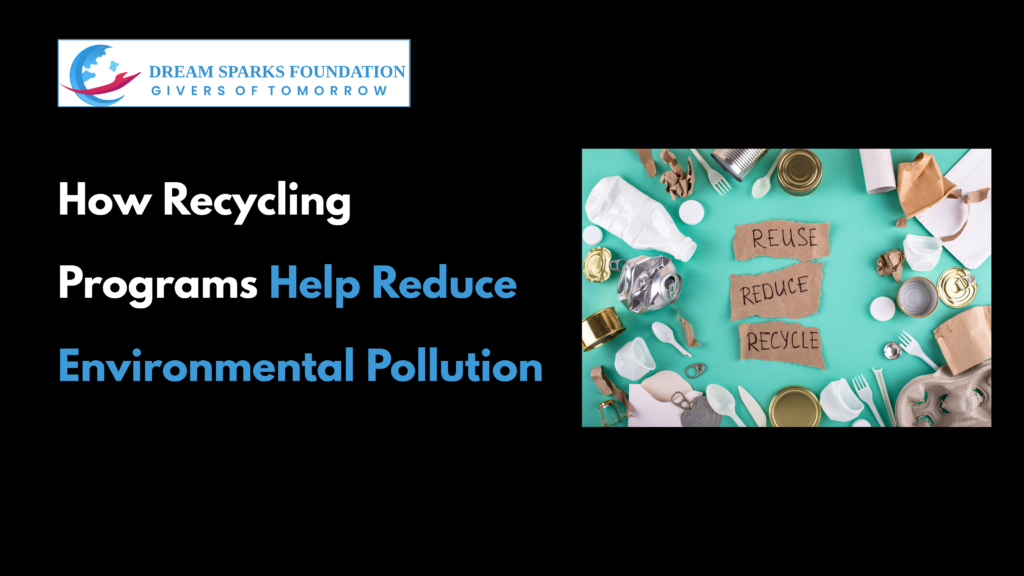
Environmental pollution has become one of the biggest challenges facing our planet. From plastic pollution filling our oceans to air pollution affecting public health, the impact of improper waste disposal continues to grow. One of the simplest yet most effective solutions is recycling. Understanding how recycling reduce pollution can help individuals, businesses, and communities make better environmental choices.
Recycling programs reduce waste sent to landfills, conserve valuable natural resources, decrease greenhouse gas emissions, and improve air quality. They also support a circular economy where materials are reused instead of discarded. Organizations like Dream Sparks Foundation actively promote responsible waste management and recycling awareness to create cleaner and healthier communities.
In this guide, you’ll learn how recycling works, why it matters, and how it helps reduce environmental pollution while protecting future generations.
What Is Recycling?
Recycling is the process of collecting, sorting, processing, and converting waste materials into new products instead of throwing them away.
Common recyclable materials include:
- Paper and cardboard
- Plastic bottles and containers
- Glass bottles
- Aluminum cans
- Steel products
- Electronic waste
- Organic waste (through composting)
These materials are transformed into reusable products, reducing the demand for new raw materials.
Why Is Environmental Pollution Increasing?
Environmental pollution occurs when harmful substances contaminate air, water, and land.
Major contributors include:
- Plastic waste pollution
- Burning fossil fuels
- Open waste burning
- Industrial emissions
- Deforestation
- Improper waste disposal
- Excessive landfill waste
Without effective recycling systems, these problems continue to worsen and contribute to climate warming and ecosystem damage.
Continue reading about Managing and Reducing Wastes: A Guide for Commercial Buildings with this link
How Recycling Reduce Pollution
Recycling helps in several important ways.
1. Reduces Plastic Pollution
Plastic waste is one of the largest contributors to environmental pollution.
Instead of ending up in rivers, lakes, or oceans, recyclable plastics can be processed into new products such as:
- Packaging materials
- Furniture
- Pipes
- Textile fibers
- Construction materials
This significantly reduces plastic pollution and prevents wildlife from being harmed.
Benefits
- Cleaner oceans
- Less litter
- Reduced landfill waste
- Lower plastic production
2. Improves Air Quality
Manufacturing products from recycled materials generally requires less energy than producing them from raw materials.
Lower energy consumption means:
- Fewer industrial emissions
- Better air quality
- Reduced air pollution
- Lower greenhouse gas emissions
3. Reduces Water Pollution
Improper waste disposal contaminates rivers, lakes, and groundwater.
Recycling helps reduce water pollution by:
- Preventing landfill leaks
- Reducing industrial wastewater
- Minimizing chemical runoff
- Keeping plastics out of water bodies
This protects aquatic ecosystems and ensures cleaner drinking water.
4. Lowers Greenhouse Gas Emissions
One of the major causes of global warming is excessive greenhouse gas emissions.
Recycling reduces emissions by:
- Saving manufacturing energy
- Reducing transportation emissions
- Lowering landfill methane production
- Supporting energy-efficient production
As a result, recycling becomes an important strategy for slowing climate change.
Benefits of Community Recycling Programs
Successful recycling programs create benefits beyond environmental protection.
Environmental Benefits
- Cleaner surroundings
- Reduced pollution
- Less landfill waste
- Better biodiversity
Economic Benefits
- Job creation
- Lower waste management costs
- Growth of recycling industries
Social Benefits
- Public awareness
- Cleaner neighborhoods
- Improved public health
- Sustainable lifestyles
The Role of Organizations Like Dream Sparks Foundation
Community organizations play a vital role in promoting sustainable waste management.
Dream Sparks Foundation supports recycling awareness through:
- Community education programs
- Waste segregation campaigns
- Recycling initiatives
- Environmental awareness workshops
- Sustainable waste management practices
These efforts encourage individuals and businesses to adopt responsible recycling habits and contribute to cleaner, healthier communities.
Recycling Supports a Circular Economy
Traditional economies follow a “take, make, and dispose” model, where products are manufactured, used, and discarded. This linear approach leads to excessive waste generation and depletion of natural resources.
A circular economy focuses on keeping materials in use for as long as possible through recycling, repairing, reusing, and remanufacturing.
Benefits of a circular economy include:
- Reduced waste generation
- Conservation of raw materials
- Lower environmental pollution
- Increased resource efficiency
- Sustainable economic growth
- Creation of green jobs
Recycling is one of the most important pillars supporting this sustainable economic model.
Conclusion
Recycling is one of the most practical and impactful ways to reduce environmental pollution. By conserving natural resources, improving air quality, reducing plastic waste pollution, lowering greenhouse gas emissions, and minimizing water pollution, recycling supports a healthier environment and a more sustainable future.
Whether at home, in schools, businesses, or communities, every recycling effort contributes to cleaner surroundings and helps combat climate change. Through awareness, responsible waste segregation, and active participation in recycling programs, organizations like Dream Sparks Foundation are empowering people to protect the planet—one recycled item at a time.