Events bring people together for celebrations, conferences, exhibitions, festivals, corporate gatherings, weddings, sports events, and community programs. However, they can also generate significant quantities of food waste, plastic packaging, paper, disposable products, electronic waste, and other waste materials.
This makes event waste management an important part of planning a responsible and sustainable event.
From food packaging and plastic bottles to decorations, promotional materials, food leftovers, and technology waste, almost every stage of an event can generate waste. Without proper planning, much of this waste may end up in landfills or be improperly disposed of.
The good news is that event organizers can significantly reduce waste by planning waste prevention, segregation, recycling, reuse, and responsible waste disposal before the event even begins.
A well-designed waste management system not only reduces the environmental impact of an event but can also lower operating costs, improve the attendee experience, support recycling, and strengthen an organization’s sustainability reputation.
What Is Event Waste Management?
Event waste management is the planned process of preventing, reducing, collecting, segregating, recycling, reusing, treating, and safely disposing of waste generated before, during, and after an event.
It covers different categories of waste, including:
- Food and organic waste
- Plastic waste
- Paper and cardboard
- Glass
- Metal
- Packaging materials
- Disposable items
- E-waste
- Technology waste
- Promotional materials
- Decorative materials
- Sanitary waste
- Hazardous waste where applicable
- Medical waste at events requiring medical facilities
Effective event waste management follows the waste hierarchy:
Prevent → Reduce → Reuse → Recycle → Recover → Dispose Responsibly
The objective is not simply to collect waste after an event. The goal is to prevent waste from being generated in the first place and ensure that unavoidable waste is handled responsibly.
Why Is Event Waste Management Important?
Large events can generate considerable amounts of waste within a very short period. Poorly managed waste can create environmental, operational, and reputational problems.
1. Reduces Environmental Impact
Reducing waste decreases the amount of material sent to landfills and helps conserve natural resources.
2. Improves Recycling
Proper segregation makes recyclable materials easier to recover and process.
3. Reduces Waste Disposal Costs
When recyclable and reusable materials are separated from general waste, organizations may reduce the amount of waste requiring disposal.
4. Prevents Littering
Clearly marked waste collection points encourage attendees to dispose of rubbish correctly.
5. Supports Sustainability Goals
Organizations increasingly want events to align with environmental, social, and governance goals.
6. Improves Brand Reputation
A sustainable event demonstrates that an organization takes environmental responsibility seriously.
7. Creates Better Event Experiences
Clean venues, accessible waste bins, and well-organized waste collection contribute to a more pleasant environment for attendees.
9 Strategies for Better Event Waste Management
One of the most important rules of event waste management is to plan before the event begins.
Waste should be considered during the initial event planning stage rather than after the event has finished.
Organizers should estimate:
- Expected number of attendees
- Event duration
- Food and beverage requirements
- Number of vendors
- Packaging requirements
- Expected waste volume
- Number and location of waste bins
- Waste collection requirements
- Recycling requirements
- Waste disposal services
- Availability of waste collectors
A simple waste management plan can identify where waste is likely to be generated and determine how it will be handled.
For larger events, organizers can also work with professional waste and management services to develop a customized waste management strategy.
2. Reduce Single-Use Products
Single-use products are one of the major sources of waste at events.
Plastic cups, plates, cutlery, straws, bottles, food containers, and packaging can quickly accumulate when thousands of people attend an event.
Organizers can reduce waste by:
- Using reusable plates and cutlery
- Providing refillable water stations
- Avoiding unnecessary plastic packaging
- Using reusable signage
- Choosing recyclable packaging
- Providing digital event information
- Avoiding individually packaged items where possible
The most sustainable waste is often the waste that is never generated.
Therefore, reducing unnecessary materials should come before focusing only on recycling.
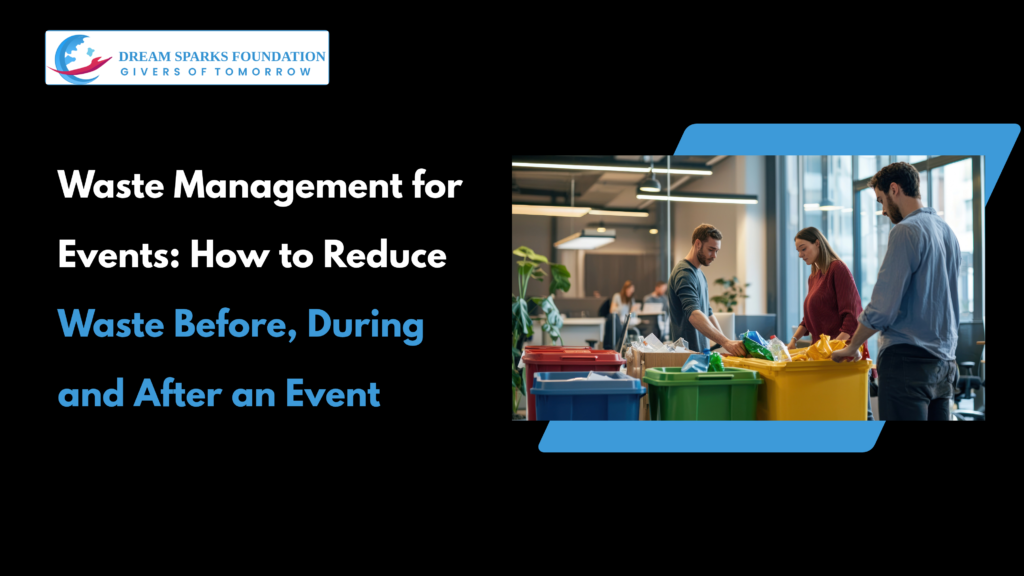
3. Create Clearly Marked Waste Segregation Stations
Even when recyclable materials are available, they can become contaminated if different types of waste are mixed together.
A well-designed waste management system should provide clearly identified collection stations.
Depending on the event, separate containers can be provided for:
- Wet or organic waste
- Dry waste
- Paper and cardboard
- Plastic
- Glass
- Metal
- E-waste
- General waste
Use simple signage, icons, and clear instructions so attendees understand where each item belongs.
For large events, volunteers or waste management staff can also help attendees with segregation.
4. Manage Food Waste Effectively
Food waste can represent a significant portion of waste generated at events.
Catering teams can reduce food waste through better planning and monitoring.
Practical measures include:
- Estimate food requirements accurately
- Avoid excessive food preparation
- Monitor consumption during the event
- Use smaller serving portions where appropriate
- Store surplus food safely
- Donate suitable surplus food through responsible channels
- Compost unavoidable organic waste
- Separate food waste from dry waste
Food waste should never simply be mixed with recyclable materials because contamination can make recycling more difficult.
A properly designed organic waste management process can help convert suitable food waste into useful resources such as compost or other organic outputs.
5. Replace Printed Materials with Digital Alternatives
Modern events can significantly reduce paper waste by using digital communication.
Instead of printing large quantities of brochures, schedules, tickets, maps, and promotional materials, organizers can use:
- QR codes
- Digital invitations
- Mobile event applications
- Digital tickets
- Email communication
- Online registration
- Digital event schedules
- Electronic feedback forms
This approach can reduce paper consumption while also making event information easier to update.
However, digital solutions should be implemented thoughtfully because devices and electronic infrastructure can eventually contribute to e-waste and technology waste.
Responsible digital transformation should therefore consider the complete lifecycle of technology.
6. Manage E-Waste and Technology Waste Responsibly
Modern events increasingly rely on technology.
Screens, computers, laptops, printers, cables, batteries, lighting equipment, electronic displays, and other devices may create e-waste.
Instead of placing electronic equipment in general waste bins, event organizers should arrange appropriate e-waste recycling and collection.
Examples of event-related e-waste include:
- Batteries
- Damaged cables
- Electronic accessories
- Computer equipment
- Printers
- LED equipment
- Small electronic devices
- Outdated promotional technology
- Damaged charging equipment
Professional e-waste recycling partners can help ensure that electronic materials are handled through appropriate channels.
This is particularly important as the waste management industry increasingly focuses on recovering valuable materials from discarded electronics.
Continue reading about What Makes a School Waste Programme Truly Effective?with this link.
7. Reuse Decorations, Furniture and Event Materials
Events often use decorations, banners, furniture, exhibition structures, displays, backdrops, and promotional materials that may be used only once.
Instead of treating these materials as disposable, organizers can design them for reuse.
For example:
- Use modular exhibition structures
- Reuse banners where possible
- Rent furniture instead of purchasing disposable items
- Store decorations for future events
- Choose reusable signage
- Design generic promotional materials
- Donate usable materials after the event
This approach reduces waste materials and can also save money for organizations that conduct events regularly.
8. Work With Professional Waste Collectors and Recycling Partners
Managing waste at a large event can be challenging without proper infrastructure.
Professional waste collectors and waste disposal services can help with:
- Waste collection
- Segregation
- Transportation
- Recycling
- Organic waste processing
- E-waste handling
- Responsible waste disposal
- Post-event cleanup
Before selecting a service provider, event organizers should understand what happens to the collected waste.
Simply removing waste from the venue does not necessarily mean the waste has been sustainably managed.
Ask waste management partners:
Where does the waste go after collection?
A responsible waste management system should provide transparency regarding collection, processing, recycling, recovery, and final disposal.
9. Measure Waste and Improve the System After Every Event
A successful event waste management program should not end when the venue becomes clean.
Organizers should measure the results.
Important metrics can include:
- Total waste generated
- Recyclable waste collected
- Organic waste collected
- E-waste generated
- General waste disposed
- Percentage of waste recycled
- Amount of food waste
- Number of reusable materials
- Waste disposal costs
- Waste generated per attendee
For example:
Total Waste ÷ Number of Attendees = Waste Generated Per Attendee
This simple measurement can help organizers compare different events and identify opportunities for improvement.
Conclusion
Event waste management should be considered an essential part of responsible event planning rather than an activity that begins only after an event ends.
From reducing single-use products and preventing food waste to introducing segregation stations, recycling materials, managing e-waste, reusing event materials, and measuring waste generation, organizers have many opportunities to make events more sustainable.
The most effective approach is to think about waste across the entire event lifecycle:
Before the Event → Prevent and Reduce
During the Event → Segregate and Manage
After the Event → Recover, Recycle and Measure
With proper planning, technology, community participation, and responsible waste management partners, events can significantly reduce their environmental impact.
For organizations working toward cleaner and more sustainable communities, responsible waste and management services can be an important step toward building a circular and resource-efficient future.
Dream Sparks Foundation can contribute to this movement by promoting awareness, encouraging responsible waste practices, and helping communities understand that sustainable waste management begins with everyday choices.