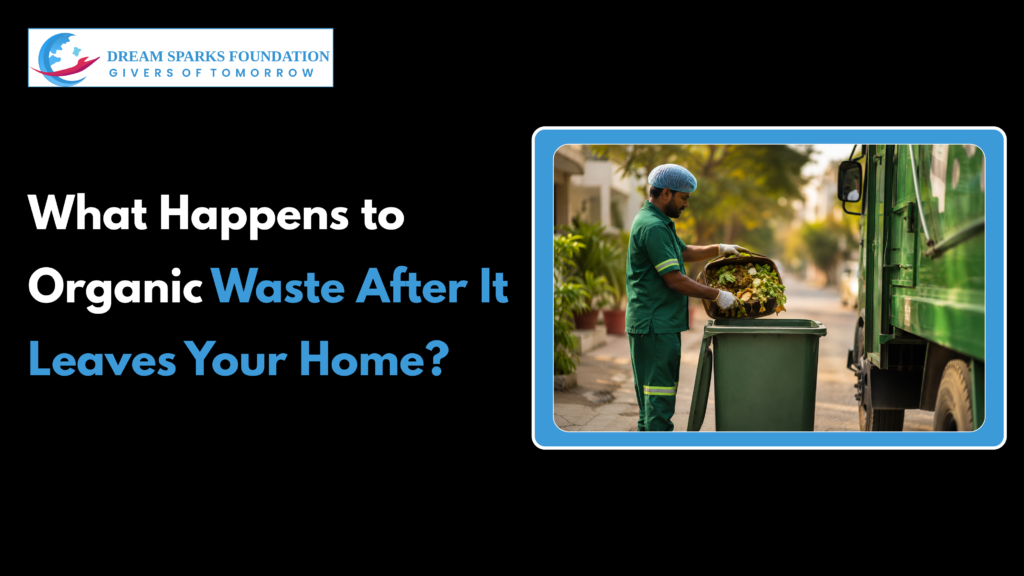
Every day, households generate large amounts of organic waste, including food scraps, fruit peels, vegetable leftovers, coffee grounds, eggshells, and garden waste. Unfortunately, much of this biodegradable waste is mixed with plastic, paper, and other non-recyclable materials before being thrown into a single waste bin. This simple mistake creates major environmental problems, increases landfill waste, and wastes valuable natural resources.
Organic waste management begins at home. By separating biodegradable waste from recyclable and non-recyclable materials, every household can reduce pollution, improve waste management systems, and contribute to a cleaner and healthier environment. Organic waste is not just garbage—it is a valuable resource that can be transformed into nutrient-rich compost, biogas, and organic fertilizers.
For organizations like Dream Sparks Foundation, promoting responsible waste segregation and sustainable waste management practices helps build environmentally conscious communities while reducing the burden on landfills.
What Is Organic Waste?
Organic waste refers to materials that naturally decompose through microorganisms. Unlike plastic or metal, organic materials break down into nutrient-rich compost when handled correctly.
Common examples include:
- Fruit and vegetable peels
- Leftover cooked food
- Bread and rice
- Tea leaves and coffee grounds
- Eggshells
- Garden leaves and grass clippings
- Flowers
- Plant trimmings
These materials are often called biodegradable waste because nature can safely decompose them.
Continue reading about Preventing Wasted Food at Home: Practical Strategies to Reduce Food Waste at the Source with this link
What Happens to Organic Waste After It Leaves Your Home?
Most people place their waste outside their homes without knowing what happens next. The journey of organic waste depends largely on whether it has been separated properly
Step 1: Waste Collection
Municipal authorities or waste collection agencies collect household waste using designated vehicles.
If organic waste is separated properly, it is transported directly to:
- Composting facilities
- Organic waste treatment plants
- Biogas plants
- Organic waste converter systems
However, if food waste is mixed with plastic and other contaminants, it often becomes unsuitable for composting and ends up in landfills.
Step 2: Sorting at Waste Management Facilities
At waste management facilities, workers separate recyclable materials from mixed waste.
This process becomes easier and more efficient when households segregate waste before disposal.
Materials are generally divided into:
- Organic waste
- Recyclable waste
- Hazardous waste
- Non-recyclable waste
Proper segregation saves time, reduces processing costs, and improves recycling efficiency.
Step 3: Composting Organic Waste
One of the best uses of biodegradable waste is composting.
Composting is a natural biological process where microorganisms break down organic matter into nutrient-rich compost.
Materials commonly used include:
- Food waste
- Dry leaves
- Vegetable peels
- Fruit scraps
- Garden waste
During composting, bacteria, fungi, moisture, and oxygen work together to produce compost that enriches soil naturally.
Step 4: Producing Organic Compost
After several weeks, organic waste becomes dark, earthy compost.
This compost can be used for:
- Home gardens
- Parks
- Agriculture
- Landscaping
- Urban farming
- Tree plantations
Plant compost improves:
- Soil fertility
- Water retention
- Root growth
- Plant health
Instead of becoming pollution, food waste becomes valuable nutrition for plants.
Why Separating Organic Waste Matters
1. Reduces Landfill Waste
Mixed waste occupies valuable landfill space.
When biodegradable waste is separated, landfill volumes decrease significantly.
This extends landfill life while reducing environmental pollution.
2. Prevents Greenhouse Gas Emissions
Food waste buried in landfills decomposes without oxygen and releases methane.
Methane is a greenhouse gas far more potent than carbon dioxide over the short term.
Proper composting allows organic materials to decompose aerobically, reducing harmful emissions.
3. Creates Valuable Compost
Instead of wasting food scraps, composting transforms them into natural fertilizer.
Benefits include:
- Improved soil quality
- Better crop yields
- Reduced chemical fertilizer use
- Healthier gardens
4.Saves Public Resources
Mixed waste requires additional labor, sorting, transportation, and landfill space.
Source segregation reduces operational costs for municipalities and improves overall waste management efficiency.
The Environmental Problems Caused by Mixed Waste
When organic waste mixes with plastics and other materials, several issues arise.
Increased Pollution
Food waste contaminates recyclable materials, making recycling difficult.
Bad Odors
Organic waste decomposes quickly, producing unpleasant smells.
Pest Infestation
Mixed garbage attracts:
- Rats
- Flies
- Mosquitoes
- Cockroaches
Higher Carbon Emissions
Transporting contaminated waste over long distances increases fuel consumption and greenhouse gas emissions.
Benefits of Home Composting
Home composting offers several environmental and economic advantages.
Reduces Household Waste
Nearly half of household waste can be composted.
Produces Free Fertilizer
Homemade compost nourishes plants naturally.
Improves Soil Health
Organic compost increases microbial activity and soil fertility.
Saves Money
Homeowners spend less on chemical fertilizers.
How Communities Benefit from Organic Waste Management
When households separate organic waste consistently, communities experience lasting benefits.
These include:
- Cleaner neighborhoods
- Reduced landfill dependence
- Lower waste collection costs
- Better public health
- Increased recycling efficiency
- Improved soil quality
- More green spaces
- Lower greenhouse gas emissions
- Stronger environmental awareness
Community participation is essential for successful waste management programs
Conclusion
Every banana peel, vegetable scrap, and leftover meal has the potential to become something valuable instead of ending up in a landfill. Proper organic waste management starts with one simple habit—separating biodegradable waste from other waste at home.
When households practice responsible waste management, communities become cleaner, landfills receive less waste, greenhouse gas emissions decrease, and valuable compost is returned to the soil. Whether through home composting, municipal composting facilities, or biogas plants, organic waste can become a powerful resource for environmental sustainability.
By making waste segregation a daily habit and encouraging others to do the same, we can protect natural resources, reduce pollution, and build healthier, greener communities for future generations.